Konjac jelly diet market — 2026 category review
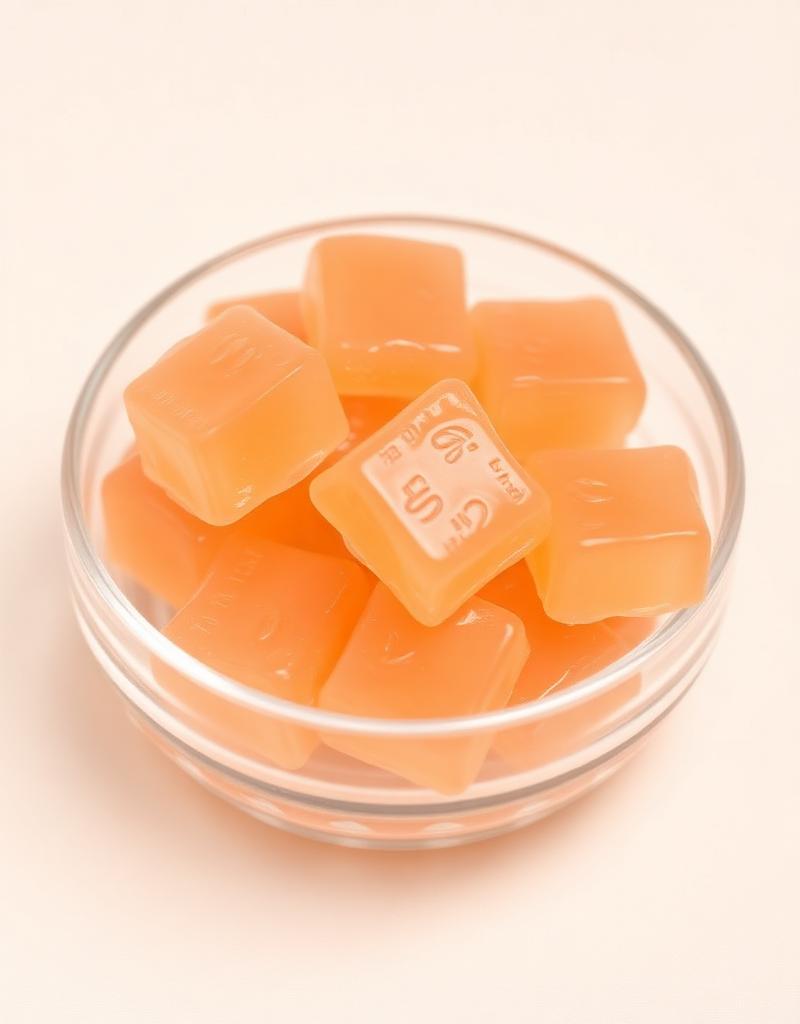
A snapshot of new launches, price tiers, and channel trends in the konjac jelly category in H1 2026.
Konjac jelly is a format brands keep returning to in the diet category, but it's also one where miscalculating fiber content or ad wording easily leads to rejection or enforcement action. This article is not a market-size forecast; it's a planning checklist for the formulation and labeling rules that matter when designing a konjac jelly.
Check the approved functionality standard for konjac (glucomannan) first
Under Korea's health functional food standards, glucomannan (konjac mannan) dietary fiber extracted and refined from konjac is recognized as helping "improve blood cholesterol and support regular bowel movement" when consumed at 2.7–17g per day. To label a product's functionality, the actual content must meet this threshold — simply using konjac as an ingredient does not justify a functionality claim.
Can a general food say "diet"?
In December 2022, Korea's Constitutional Court ruled that using "diet" or other weight-control wording on a food without recognized obesity/body-fat-related functionality risks making consumers mistake it for a health functional food — a prohibited form of advertising. In other words, a konjac jelly classified as a general food cannot use direct wording like "diet" or "weight loss"; that wording is available only if the product is separately formulated with an ingredient recognized for body-fat-reduction functionality (e.g., green tea extract, CLA, garcinia cambogia extract, chitosan/chito-oligosaccharide) and certified as a health functional food.
Content-labeling mismatches are a recurring issue
In past MFDS reviews of konjac jelly products on the market, a significant share of flagged products had a mismatch between the labeled and actual konjac content, and the labeled content itself often fell well short of the functionality threshold. When planning a konjac jelly, design the glucomannan content to a level you can actually verify, and build quality control that keeps labeled content matched to real input.
Options to consider when planning the category
If you plan the konjac jelly as a general food, keep claims limited to factual statements like "fullness" or "low-calorie snack." If you want to make a weight-management claim, consider redesigning the product type as a health functional food or functional food with claims by adding an ingredient recognized for body-fat-reduction functionality. Since the pre-screening process and the range of allowable wording differ by product type, fix the product type during formulation planning, not afterward.
- Did you design glucomannan content to meet the recognized functionality threshold (2.7–17g/day)?
- Did you fix the product type (general food / health functional food / functional food with claims) before formulating?
- Did you avoid diet/weight-loss wording on a general-food product?
- Do you have quality control that keeps labeled content matched to actual input?
Brand checkpoints
- Did you fix the product type first and design ingredients/wording to match it?
- Did you confirm that any ingredient you plan to make a functionality claim about is actually recognized for that functionality?
- Do you have a testing plan to match labeled konjac content with measured content?
- Did you prepare labeling/ad copy according to whether it's subject to pre-screening?
When planning a diet-category product like konjac jelly, Balanced DietLab designs content and formulation through our AI Formula Lab, and runs OEM/ODM production together with ad-claim pre-review, reducing the risk of product-type misclassification.